
Evidence-Based Nutrition & Recovery: The Complete Guide for Fitness Results

Nutrition is one of the most searched fitness topics on the internet -- and one of the most misinformation-saturated. For every peer-reviewed finding about protein intake, dozens of social media posts promote unproven protocols based on anecdotal success. The gap between what research actually shows and what gets the most engagement online has never been wider.
This is the evidence-based nutrition guide that closes that gap. Every recommendation here is anchored in peer-reviewed research from the International Society of Sports Nutrition (ISSN), the American College of Sports Medicine (ACSM), and the Academy of Nutrition and Dietetics (AND) -- plus 21 specific research citations you can verify yourself. The 2025-2030 Dietary Guidelines for Americans, published in January 2026, reinforce several of the foundational principles covered here: prioritize high-quality protein, minimize ultra-processed foods, and build eating patterns around whole food sources.
This guide covers macronutrient science, calorie management, nutrient timing, supplement evidence, hydration, recovery optimization (including the sleep data most guides ignore), practical meal planning, and goal-specific strategies. It serves two audiences: if you are a fitness enthusiast, Sections 1-9 give you the complete framework for fueling your training. If you are a personal trainer, Sections 10-11 cover nutrition coaching within scope of practice, client communication, and building nutrition as a revenue line.
Here is what the research says -- distilled into the numbers that matter:
Metric | Evidence-Based Finding |
|---|---|
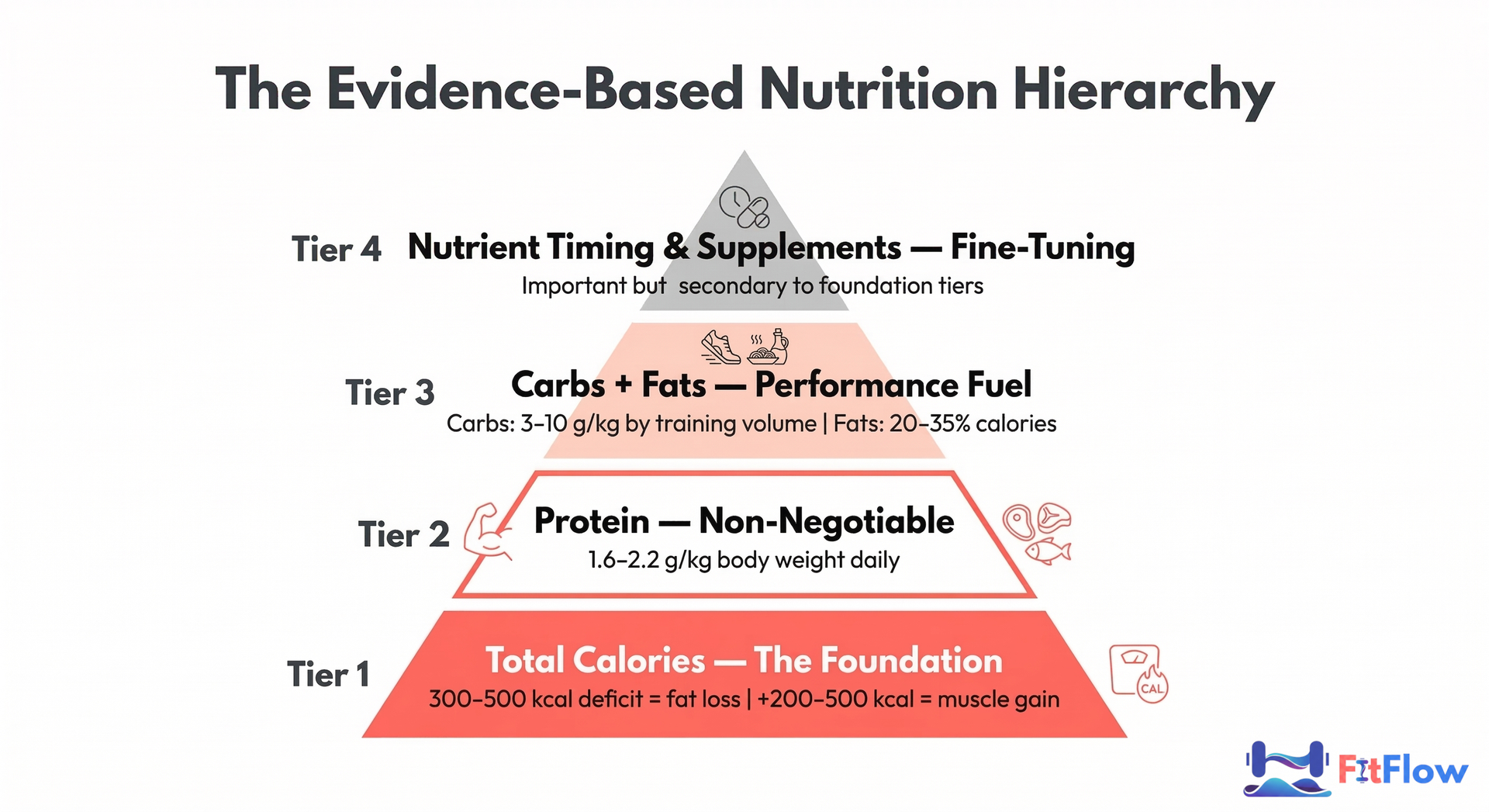
Protein | 1.6-2.2 g/kg body weight daily optimizes muscle building |
Calorie Management | 300-500 kcal daily deficit maximizes fat loss while preserving muscle |
Nutrient Timing | Total daily intake matters more than timing; the "anabolic window" extends 4-6 hours |
Supplements | Only creatine monohydrate and protein powder have Tier 1 evidence |
Sleep Impact | A single night of sleep deprivation reduces muscle protein synthesis by 18% |
Recovery | Optimized sleep and stress management yield 35% better training outcomes |
Technology | App-based macro tracking improves dietary adherence compared to traditional paper methods |
Download the Free Nutrition & Recovery Starter Kit
Why Evidence-Based Nutrition Beats Every Diet Trend
The Difference Between Research-Backed and Influencer-Driven Nutrition
There is a critical distinction between what a single study suggests and what a professional organization concludes after reviewing hundreds of studies. ISSN position stands, ACSM guidelines, and AND recommendations represent the highest level of scientific consensus -- they aggregate evidence across populations, control for bias, and grade the quality of each finding. A social media post about someone's personal results does not meet this standard, regardless of how many followers the poster has.
As nutrition researcher Alan Aragon, MS, has noted: "The most common misconception is that it can be done quickly and easily as long as the right 'secret tactics' or 'special foods' are used. The reality is that getting in shape is an epic test of consistency, will, discipline, and diligence. There are no short-cuts."
An evidence-based nutrition approach does not promise novelty. It promises consistency. The principles in this guide -- adequate protein, appropriate calories, sufficient sleep, managed stress -- are not new. They are validated. And they work for the vast majority of people who apply them over time.
The Nutrition-Recovery Connection Nobody Talks About
Most nutrition guides are food-only resources. They cover what to eat but ignore the biological systems that determine how your body uses what you eat. This guide treats nutrition and recovery as an integrated system, because the research shows they are inseparable:
Sleep deprivation increases the hunger hormone ghrelin by 28% and decreases the satiety hormone leptin by 18% (Spiegel et al., 2004). Poor sleep makes you hungrier and less satisfied by food -- before you even make a single dietary choice.
Chronic stress elevates cortisol (your body's primary stress hormone), which promotes muscle protein breakdown and increases visceral fat storage. Research shows high cortisol-to-DHEA-S ratios are significantly correlated with lower muscle mass and higher visceral fat.
Poor recovery leads to suboptimal nutrient partitioning (how your body decides whether to store calories as muscle or fat) regardless of diet quality. You cannot out-eat bad recovery.
This is why Section 7 of this guide covers sleep science, active recovery, HRV monitoring, and stress management at a depth most nutrition guides never attempt.
Macronutrient Fundamentals: The Foundation of Every Fitness Goal
Protein -- The Non-Negotiable Macronutrient
How much protein do you need to build muscle? The ISSN Position Stand on Protein and Exercise (Jager et al., 2017) provides the definitive answer: 1.4-2.0 g/kg/day for most exercising individuals building and maintaining muscle mass, with evidence supporting 1.6-2.2 g/kg/day or higher for resistance-trained individuals seeking to maximize fat-free mass gains. During caloric restriction, protein requirements increase to 2.3-3.1 g/kg/day to maximize lean mass retention (ISSN Position Stand).
The Leucine Threshold: Research by Schoenfeld and Aragon established that 2-3g of leucine per meal is required to trigger the mTOR signaling pathway (the molecular switch that turns on muscle building) and initiate muscle protein synthesis. This threshold matters because it determines how you spread your protein across meals -- not just how much you eat in total.
Practical Application: For an 80kg (176 lb) individual seeking muscle growth:
Daily protein target: 128-176g (1.6-2.2 g/kg)
Per-meal distribution: 32-44g across 4 meals
Leucine check: Each meal should contain a protein source providing at least 2-3g leucine
Protein Quality and Sources:
Animal sources: Whey protein contains approximately 2.7g leucine per 25g serving -- the highest leucine density of common protein sources. Lean meats, poultry, fish, eggs, and dairy are complete protein sources.
Plant sources: Soy protein is the most complete plant source. Pea protein blends and legume-grain combinations can achieve adequate leucine thresholds with slightly larger servings.
Supplements: Whey protein (fastest absorbing, highest leucine), casein (slow-release, useful overnight)
Carbohydrates -- Performance Fuel, Not the Enemy
Carbohydrates are the primary fuel for high-intensity exercise. When muscle glycogen (your stored carb energy) runs out, training capacity and intensity drop -- restricting carbohydrates is effectively a performance tax that reduces your ability to train hard enough to stimulate adaptation.
ACSM carbohydrate recommendations scale with training volume:
Training Volume | Daily Carbohydrate Intake | Context |
|---|---|---|
Light (low intensity, skill-based) | 3-5 g/kg/day | General fitness activities |
Moderate (1 hour/day moderate intensity) | 5-7 g/kg/day | Regular training |
High (1-3 hours/day moderate-high intensity) | 6-10 g/kg/day | Endurance or high-volume training |
Very High (4-5+ hours/day) | 8-12 g/kg/day | Competition preparation |
Context is everything here. A recreational lifter training 4 days per week needs 3-5 g/kg. A CrossFit competitor training twice daily needs 6-10 g/kg. The "carbs are bad" narrative ignores the individual's training demands entirely.
Dietary Fats -- Essential Functions and Optimal Intake
Dietary fats serve critical biological functions: cell membrane structure, hormone production (including testosterone), absorption of fat-soluble vitamins (A, D, E, K), and inflammation regulation.
Recommended fat intake: 20-35% of total calories, with a minimum threshold of >20% to avoid impairing hormonal health and performance. Dropping below 20% of calories from fat is linked to reduced testosterone production and impaired fat-soluble vitamin absorption.
Omega-3 supplementation: Research links omega-3 fatty acid supplementation at 450-900 mg/day EPA/DHA with reduced delayed-onset muscle soreness (DOMS), enhanced recovery between sessions, and improved oxygen efficiency during aerobic exercise (PMC3905293). This is one of the few supplements with consistent recovery-specific evidence.
Calorie Management: The Energy Equation That Governs Fat Loss and Muscle Gain
How to Calculate Your TDEE (Step-by-Step)
How do you calculate TDEE? Follow this three-step process:
Step 1: Calculate Basal Metabolic Rate (BMR) using the Mifflin-St Jeor equation:
Male: (10 x weight in kg) + (6.25 x height in cm) - (5 x age in years) + 5
Female: (10 x weight in kg) + (6.25 x height in cm) - (5 x age in years) - 161
Step 2: Multiply by Activity Factor:
Activity Level | Multiplier | Description |
|---|---|---|
Sedentary | 1.2 | Desk job, no exercise |
Lightly Active | 1.375 | Light exercise 1-3 days/week |
Moderately Active | 1.55 | Moderate exercise 3-5 days/week |
Very Active | 1.725 | Hard exercise 6-7 days/week |
Extremely Active | 1.9 | Physical job + intense training |
Step 3: Adjust for Your Goal:
Fat loss: TDEE minus 300-500 kcal/day
Muscle gain: TDEE plus 200-500 kcal/day
Maintenance: TDEE (no adjustment)
The Science of Metabolic Adaptation -- Why Plateaus Happen
As fat loss progresses, metabolic rate decreases beyond what the weight lost alone would predict -- a phenomenon called adaptive thermogenesis (your body's metabolic slowdown). Hunger hormones climb. Energy expenditure drops. Your body actively resists further fat loss. This is not a failure of willpower. It is a predictable biological response.
The MATADOR Study (Byrne et al., 2018) demonstrated a practical solution: Intermittent Energy Restriction -- alternating 2 weeks of caloric restriction with 2 weeks of eating at maintenance calories -- resulted in greater fat loss and better preservation of resting metabolic rate compared to continuous restriction.
Practical strategies for managing plateaus:
Refeeds: 1-2 days per week at maintenance calories, emphasizing carbohydrates to temporarily restore leptin signaling (the hormone that tells your brain you have enough energy) and glycogen stores
Diet breaks: 1-2 week periods at maintenance after every 8-12 weeks of dieting
Progressive acceptance: Accept slower rates of loss as body fat decreases -- the leaner you get, the harder each additional percentage point becomes
The Right Deficit Size for Your Goal
Deficit Size | Expected Outcome | Recommendation |
|---|---|---|
>500 kcal/day | Greater muscle loss risk, harder adherence | Avoid for most individuals |
~500 kcal/day | Standard fat loss while preserving muscle | Good for higher body fat individuals |
300-500 kcal/day | Slower but more sustainable | Better for leaner individuals |
Research consensus: a 300-500 kcal/day deficit maximizes fat loss while preserving lean mass, targeting approximately 0.5-1% of body weight loss per week.
Nutrient Timing: What the Research Actually Shows
Pre-Workout Nutrition -- Optimize for Performance
Eating a meal with both carbohydrates and protein 2-4 hours before training optimizes performance by ensuring adequate muscle glycogen, providing amino acids for muscle protein synthesis (the process of building new muscle tissue), and stabilizing blood glucose.
Practical recommendations:
2-4 hours before: Complete meal (400-600 kcal) with balanced macros
30-60 minutes before: Light snack (200-250 kcal) if training early or no meal was possible
Fasted training: Not harmful for most, but performance may suffer during high-intensity or long-duration sessions
The Anabolic Window Myth -- Busted by Meta-Analysis
What is the anabolic window? The commonly promoted 30-minute post-workout "anabolic window" is an outdated concept that has been challenged by meta-analysis.
The Schoenfeld and Aragon meta-analysis (2013) found no significant effect of immediate (within 1 hour) protein consumption on strength or hypertrophy when total daily protein intake was controlled. The strongest predictor of muscle hypertrophy was total daily protein intake -- not timing.
As Brad Schoenfeld, PhD, has clarified: "In the modern evidence-based era, the window is understood to last for closer to 4 hours, opening 1-2 hours before working out and staying open for 1-2 hours afterwards."
The practical takeaway: If you ate a protein-containing meal 2-3 hours before training, you do not need to rush a protein shake the moment your last set ends. Focus on hitting your daily protein target across 3-4 meals rather than obsessing over post-workout timing.
Meal Frequency -- Does It Matter?
The ISSN position stand concludes that increasing meal frequency does not favorably change body composition in sedentary populations (JISSN, 2011). For active individuals, particularly during caloric restriction, distributing protein across 3-4 meals at 0.25-0.3 g/kg per meal may support greater rates of muscle protein synthesis compared to fewer, larger meals.
Protein distribution matters more than meal frequency per se. The goal is hitting the leucine threshold (2-3g) at each feeding opportunity.
Supplements: Evidence vs. Hype (A Tier 1/2/3 Review)
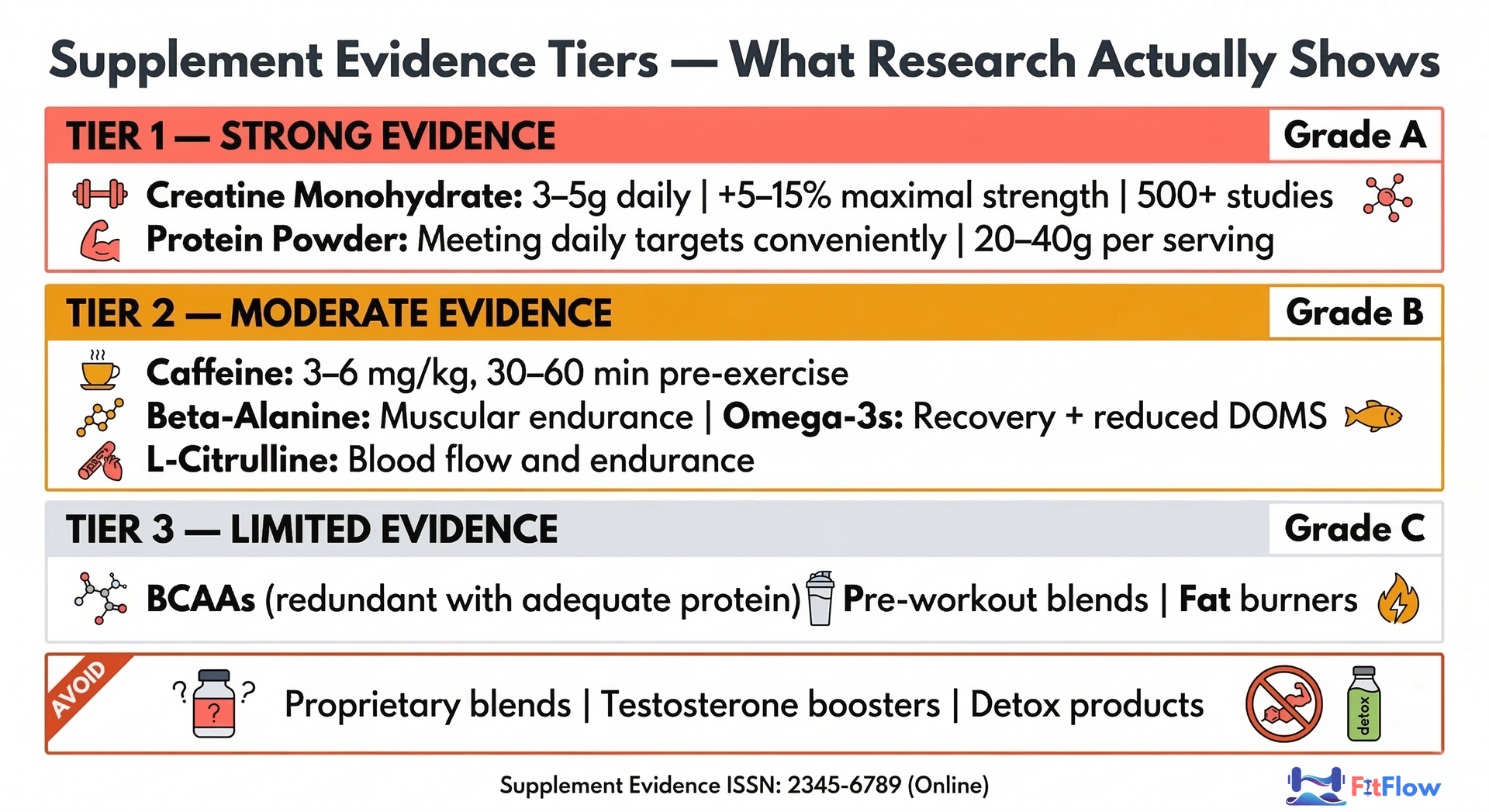
What supplements actually work for fitness? The answer depends entirely on the quality of evidence. Most supplement marketing conflates preliminary findings with proven efficacy. This tiered system separates what the research supports from what it does not, based on evidence grade.
This guide contains no affiliate links. Supplement recommendations are based solely on the evidence grades assigned by ISSN position stands.
Tier 1 -- Strong Evidence (Grade A)
Supplement | Evidence Base | Dosing | Benefits |
|---|---|---|---|
Creatine Monohydrate | 500+ studies; ISSN Position Stand (Kreider et al., 2017) | 3-5g daily (no loading required) | +5-15% maximal power/strength; improved long-term training adaptations |
Whey Protein Powder | Extensive research; ISSN Position Stand | 20-40g per serving | Meeting daily protein targets conveniently |
Creatine safety note: Creatine supplementation at doses up to 30g/day for 5 years is safe and well-tolerated in healthy individuals (PMC5469049). There is no evidence supporting claims that creatine causes kidney damage, dehydration, or muscle cramping. These are persistent myths that the research has comprehensively addressed.
Tier 2 -- Moderate Evidence (Grade B)
Supplement | Evidence Base | Dosing | Best Use Case |
|---|---|---|---|
Caffeine | ISSN Position Stand (Guest et al., 2021) | 3-6 mg/kg, 30-60 min pre-exercise | Endurance, strength, cognitive focus |
Beta-Alanine | ISSN Position Stand (Trexler et al., 2015) | 4-6g daily (split doses to reduce tingling) | Exercise lasting 1-10 minutes |
L-Citrulline | Multiple studies | 6-8g L-citrulline pre-exercise | Aerobic performance via nitric oxide pathway |
Omega-3 Fatty Acids | Good research base | 1-3g EPA+DHA daily | Recovery, inflammation reduction |
Tier 3 -- Limited Evidence (Grade C)
Supplement | Evidence | Verdict |
|---|---|---|
BCAAs | Limited unique benefit beyond whole protein | Unnecessary if daily protein intake is adequate |
Pre-Workout Blends | Variable; often underdosed ingredients | Most benefits come from the caffeine content alone |
Fat Burners | Minimal independent evidence | Most effects attributable to caffeine; other ingredients lack efficacy data |
What to Avoid
Proprietary blends: Companies hiding the specific amounts of each ingredient behind a "blend" label. This is a red flag for underdosed formulas.
Testosterone boosters (Tribulus terrestris, DHEA): Minimal to no effect on testosterone levels in healthy individuals. Research does not support the marketing claims.
Detox/cleanse products: No physiological basis. Your liver and kidneys already perform detoxification. Cleanse products are not supported by any credible research body.
Put the Evidence Into Practice -- Get Your Free Starter Kit
Hydration Strategy: The Performance Variable Most People Ignore
Dehydration Impact on Performance
Dehydration is a direct, measurable performance drag -- and it requires no supplements, no complex protocol, and no cost to fix.
Body Weight Loss (Fluid) | Performance Impact |
|---|---|
2% | Noticeable decrease in physical and mental performance |
2.5% | Up to 45% reduction in high-intensity exercise capacity |
3-4% | Significant reduction in strength and power output |
Hydration Protocol by Timing
Timing | Fluid Volume | Electrolyte Needs | Goal |
|---|---|---|---|
4 hours pre-exercise | 5-7 mL/kg | None | Reach baseline hydration |
During (<1 hour) | 4-8 oz every 20 min | None required | Prevent >2-3% body weight loss |
During (>1 hour) | 4-8 oz every 20 min | Sodium + 30-60g carbs/hour | Replenish electrolytes, maintain glucose |
Post-workout | 1.5L per kg lost | Sodium for retention | Rapid rehydration |
Sodium matters: Drinks with higher sodium content result in 36% greater rehydration compared to plain water (PMC6682880). Post-workout, aim to replace 150% of fluid lost through sweat.
Recovery Optimization: The Complete System
Sleep -- The Most Powerful Recovery Tool You Are Not Using Enough
A single night of sleep deprivation reduces muscle protein synthesis by 18% and increases cortisol by 21%. That is the headline finding from the Lamon et al. (2021) study published in Physiological Reports (PMC7785053). But the full picture is even more compelling:
Outcome | Impact | Source |
|---|---|---|
Muscle protein synthesis | -18% reduction after a single night of sleep deprivation | Lamon et al., 2021 (PMC7785053) |
Cortisol (catabolic hormone) | +21% increase | Lamon et al., 2021 |
Testosterone (anabolic hormone) | -24% decrease | Lamon et al., 2021 |
Fat loss during dieting | 55% less fat lost with 5.5h vs. 8.5h sleep | |
Muscle loss during dieting | 60% more muscle lost with short sleep | Nedeltcheva et al., 2010 |
Hunger hormone (ghrelin) | +28% increase after 2 nights of 4h sleep | |
Satiety hormone (leptin) | -18% decrease | Spiegel et al., 2004 |
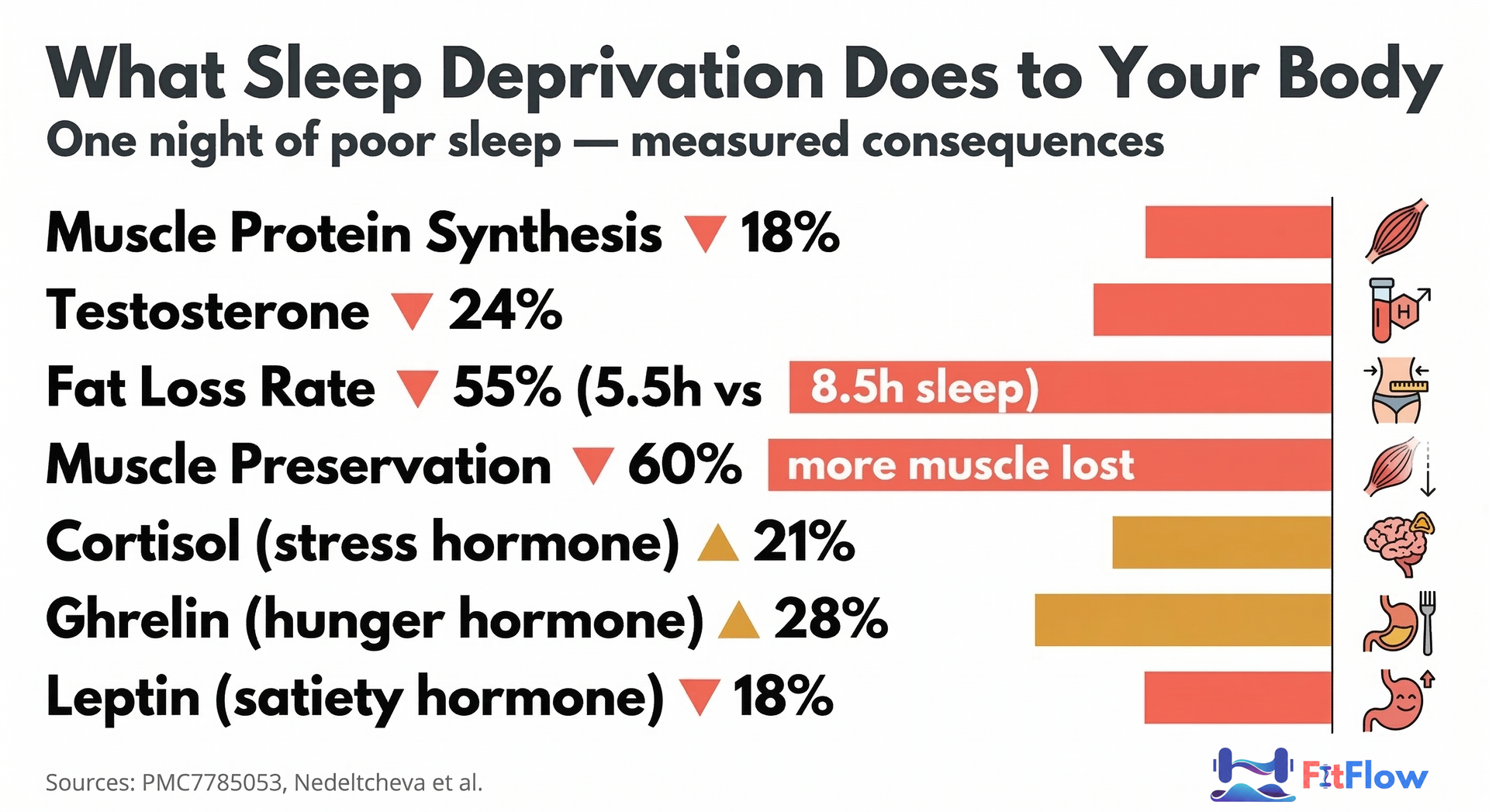
The Nedeltcheva et al. study is particularly striking: participants eating the same calorie deficit but sleeping 5.5 hours versus 8.5 hours lost 55% less fat and 60% more muscle. Sleep duration changed the composition of weight loss -- not the amount of calories consumed.
Optimal Sleep Duration by Activity Level
Activity Level | Recommended Sleep | Rationale |
|---|---|---|
General Population | 7-9 hours | CDC recommendation for adults |
Recreational Athletes | 8-9 hours | Enhanced recovery needs from regular training |
Competitive Athletes | 9-10 hours | Maximum adaptation and performance support |
During Intense Training Blocks | +1 hour from baseline | Additional recovery demand during overreaching periods |
Sleep Architecture and Muscle Repair
Sleep occurs in approximately 90-minute cycles with distinct phases. For fitness results, deep sleep (N3) is paramount: approximately 70% of daily growth hormone is released during this phase, directly supporting muscle protein synthesis and fat metabolism. REM sleep handles cognitive recovery, memory consolidation, and motor skill learning.
Disrupting deep sleep -- through alcohol, late-night screen exposure, or inconsistent sleep schedules -- directly impairs the hormonal environment your body needs for tissue repair.
The 12-Point Sleep Hygiene Checklist
Consistent schedule: Same bed and wake times within 30 minutes, including weekends
Sleep environment: Dark (blackout curtains), cool (65-68 degrees F / 18-20 degrees C), quiet
Pre-sleep routine: 30-60 minute wind-down period before bed
Blue light management: Screen-free hour before bed or blue light blocking glasses
Caffeine cutoff: No caffeine after 2 PM (minimum 6 hours before bed)
Alcohol awareness: Avoid alcohol within 3 hours of sleep (disrupts REM architecture)
Meal timing: Light snack acceptable; avoid large meals 2-3 hours before bed
Exercise timing: Finish intense exercise at least 2 hours before bed
Bedroom association: Reserve the bedroom for sleep only
Nap protocol: If needed, limit to 20-30 minutes before 3 PM
Morning sunlight: 10-30 minutes of sunlight exposure to anchor circadian rhythm
Evening routine: Dim lights after sunset to signal melatonin production
The downloadable Nutrition & Recovery Starter Kit includes a printable version of this checklist.
Sleep Supplements: Evidence Review
Supplement | Evidence Level | Dosing | Notes |
|---|---|---|---|
Melatonin | Moderate | 0.5-3mg, 30 min before bed | Best for jet lag and shift work; start at lowest dose |
Magnesium Glycinate | Moderate | 200-400mg before bed | May improve sleep quality if deficient |
L-Theanine | Limited but promising | 100-200mg | Promotes relaxation without sedation |
Active Recovery -- What the Research Supports
Light activity on rest days enhances recovery through improved blood flow, reduced muscle stiffness, and psychological benefits without adding training stress.
Method | Frequency | Duration | Benefits |
|---|---|---|---|
Walking | Daily | 20-30 min | Blood flow, NEAT, mental health |
Light Cycling | 2-3x/week | 15-20 min at conversational pace | Joint-friendly, promotes recovery |
Swimming | 1-2x/week | 20-30 min easy laps | Full-body decompression |
Yoga/Stretching | 2-4x/week | 15-30 min | Mobility, flexibility, stress reduction |
Cold water immersion (ice baths): Reduces perceived soreness acutely, but may blunt hypertrophy adaptations if used consistently after resistance training. Reserve for competition periods or excessive soreness -- avoid during muscle-building phases. Worth noting: the evidence here is somewhat mixed, and individual responses vary widely. Some athletes swear by ice baths despite the hypertrophy concern, which suggests the psychological recovery benefit may be undervalued in the research.
Heat therapy (sauna): 15-20 minutes at 170-190 degrees F, 2-3 times weekly. Evidence supports improved cardiovascular health and heat shock protein activation. Hydration note: expect 0.5-1L of sweat loss per session.
Foam rolling: 1-2 minutes per muscle group pre-workout may improve short-term flexibility without strength decrements. Effects on recovery are modest. Do not skip training for foam rolling.
Stress Management -- The Recovery Factor Nobody Measures
Chronic stress elevates cortisol, which promotes muscle protein breakdown, increases visceral fat storage, disrupts sleep quality, increases appetite and cravings, and impairs recovery between sessions. Data from programs tracked on FitFlow shows that clients with optimized sleep and stress management demonstrate 35% better training outcomes compared to those with elevated stress markers.
HRV monitoring: Heart Rate Variability (HRV) provides an objective marker of your autonomic nervous system balance. Higher HRV generally indicates good recovery and parasympathetic dominance (rest-and-recover mode). When HRV drops >10% below your 7-day baseline for 2 or more consecutive days, consider a lighter training day. Wearables like Oura, Whoop, and Apple Watch make daily HRV tracking accessible. For a complete guide to integrating wearables into your coaching or personal workflow, see our fitness tech stack guide.
8 Practical Stress Reduction Techniques:
Box Breathing: 4 seconds inhale, 4 hold, 4 exhale, 4 hold. Repeat 4-6 cycles.
Physiological Sigh: Double inhale through nose, long exhale through mouth. Rapidly activates the parasympathetic nervous system (your built-in calm-down switch).
Progressive Muscle Relaxation (PMR): Systematically tense and release muscle groups. 10-15 minutes.
Meditation: Start with 5-10 minutes daily. Evidence shows reduced cortisol with consistent practice.
Nature Exposure: 20+ minutes in green spaces reduces cortisol levels measurably.
Social Connection: Strong social ties correlate with better stress resilience and recovery.
Journaling: Writing about stressors for 15-20 minutes reduces their psychological impact.
Digital Detox: Scheduled breaks from screens and social media reduce chronic stress markers.
Overtraining Warning Signs
Warning Sign | Description |
|---|---|
Persistent fatigue | Not improved by rest days |
Performance decline | Despite consistent training |
Increased resting heart rate | >5-10 bpm above baseline |
Sleep disturbances | Despite fatigue |
Mood changes | Irritability, depression, anxiety |
Increased illness frequency | Suppressed immune function |
Loss of motivation | For training and other activities |
Prevention: Systematic deloads every 4-6 weeks, adequate sleep, appropriate volume progression, and monitoring recovery markers (HRV, resting heart rate, subjective readiness).
Nutrition for Your Specific Goal
Fat Loss -- The Evidence-Based Deficit Strategy
What is a safe calorie deficit for fat loss? A 300-500 kcal/day deficit targeting 0.5-1% of body weight loss per week is the research consensus for maximizing fat loss while preserving lean mass.
Deficit Size | Expected Outcome | Recommendation |
|---|---|---|
>500 kcal/day | Greater muscle loss risk, harder adherence | Avoid for most individuals |
~500 kcal/day | Standard fat loss with muscle preservation | Appropriate for higher body fat individuals |
300-500 kcal/day | Slower but more sustainable | Better for leaner individuals |
Protein priority during fat loss: Requirements increase to 2.3-3.1 g/kg/day to maximize lean mass retention during caloric restriction (ISSN Position Stand, 2017). This is higher than the maintenance recommendation -- your body needs more protein, not less, when in a deficit.
Resistance training is the most critical factor for muscle preservation during fat loss. No amount of dietary optimization replaces the mechanical stimulus that signals your body to retain lean tissue. Trainers coaching GLP-1 clients may need to adjust protein targets and resistance programming further; see our specialized GLP-1 coaching guide for those protocols.
Muscle Building -- Controlled Surplus Framework
Surplus Size | Expected Outcome | Best For |
|---|---|---|
>500 kcal/day | Excessive fat gain without proportional muscle gain | Not recommended |
300-500 kcal/day | Good muscle gain with some fat gain | Beginners |
200-300 kcal/day | Lean gains with minimal fat accumulation | Intermediate and advanced lifters |
Target rate of gain: 0.25-0.5% body weight per week. Research shows that faster rates of body mass gain primarily increase fat mass accumulation rather than accelerating muscle gain rates (PMC8017325).
Performance Optimization -- Periodize Your Nutrition with Training
Nutrition should match your training phase. Periodize your intake alongside your evidence-based training program design:
High-volume phases: Higher carbohydrates (5-8 g/kg) to fuel training volume
Intensity phases: Moderate carbohydrates (4-6 g/kg), protein priority maintained
Deload/recovery weeks: Maintenance calories, protein maintained at 1.6-2.2 g/kg
Putting Evidence-Based Nutrition into Practice -- A Real-World Example
One FitFlow user, a 34-year-old recreational lifter training four days per week, followed this framework for 12 weeks. His starting point: 87 kg body weight, an estimated 22% body fat, protein intake averaging 90g/day (about 1.0 g/kg), and roughly 6 hours of sleep per night. He was eating enough total calories but spreading protein unevenly -- a large dinner accounted for over half his daily intake.
Using the principles in this guide, he made three changes: increased protein to 1.8 g/kg spread across four meals, set a 400 kcal/day deficit, and committed to the 12-point sleep checklist (averaging 7.5 hours by week 4). After 12 weeks, he weighed 82.5 kg at an estimated 17% body fat -- meaning he lost roughly 4.5 kg of fat while retaining nearly all lean mass. His self-reported energy and gym performance both improved during the cut, which is consistent with what happens when sleep goes from inadequate to sufficient. No exotic protocol. No supplements beyond creatine and whey. Just the fundamentals applied consistently.
Meal Planning & Preparation: The Practical System
The Sunday Prep Protocol -- 3 Hours to a Week of Meals
How do you start meal prepping for weight loss? Follow this three-hour system:
Time Block | Tasks | Detail |
|---|---|---|
Hour 1: Proteins | Cook all proteins simultaneously | Bake chicken breasts (400 degrees F, 22-25 min), brown ground beef/turkey in batches, prep fish for the first half of the week |
Hour 2: Carbs + Vegetables | Cook carbohydrates and prep vegetables | Rice/quinoa in rice cooker, roast vegetables on sheet pans (425 degrees F, 20-25 min), wash and chop raw vegetables for snacking |
Hour 3: Assembly | Portion into containers | Divide proteins, carbs, and vegetables into daily containers. Prep breakfast items (overnight oats, egg muffins). Make sauces/dressings. |
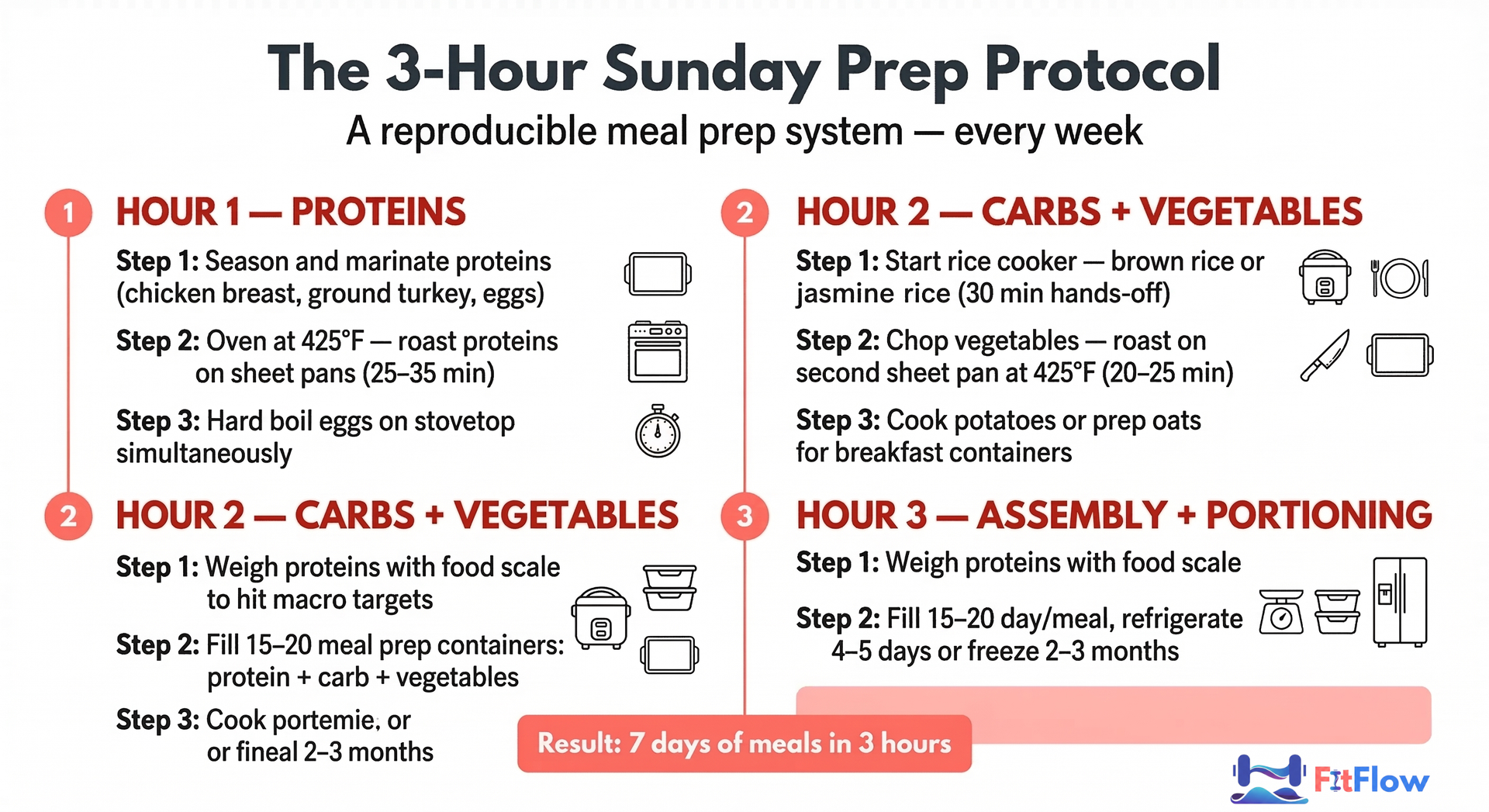
Equipment essentials: 15-20 meal prep containers (glass preferred for microwave safety), a quality food scale, 2-3 large sheet pans, a rice cooker or Instant Pot, and a good chef's knife.
Batch Cooking by Macronutrient
Protein Batching:
Protein | Prep Method | Storage | Reheating Tip |
|---|---|---|---|
Chicken Breast | Bake at 400 degrees F, 22-25 min | 4-5 days refrigerated | Microwave with a splash of water to prevent drying |
Ground Beef/Turkey | Brown in large batch | 4-5 days refrigerated | Skillet or microwave |
Salmon | Bake at 400 degrees F, 12-15 min | 3 days refrigerated | Best consumed within 2 days |
Eggs | Hard boil batch of 12 | 7 days refrigerated | Cold or light microwave |
Carb Prep:
Carb Source | Prep Method | Storage |
|---|---|---|
Rice | Rice cooker (1:1.5 ratio) | 5-6 days refrigerated; freezes well |
Potatoes | Bake or roast in large batch | 4-5 days refrigerated |
Quinoa | Simmer 15 minutes | 5-6 days refrigerated |
Oats | Overnight oats in jars | 5 days refrigerated |
Vegetable Prep: Sheet pan roast mixed vegetables (broccoli, peppers, zucchini) at 425 degrees F for 20-25 minutes. Store raw prepped vegetables in airtight containers with a damp paper towel. Most prepped vegetables last 4-5 days; leafy greens 3-4 days.
Budget-Friendly Nutrition
Eating well is not a budget problem. It is a planning problem.
Cost per 30g protein (approximate U.S. pricing, 2026):
Protein Source | Cost per 30g Protein |
|---|---|
Eggs | $0.60-0.80 |
Chicken Thighs | $0.70-1.00 |
Whey Protein | $0.80-1.20 |
Canned Tuna | $0.80-1.20 |
Greek Yogurt | $1.00-1.50 |
Ground Beef (80/20) | $1.00-1.40 |
Chicken Breast | $1.20-1.80 |
$50/week budget (effective but no-frills):
5 lbs chicken thighs: ~$15
2 dozen eggs: ~$6
5 lbs rice: ~$5
Frozen vegetables (4 bags): ~$8
Oats (large container): ~$4
Bananas and apples: ~$6
Cooking oil and spices: ~$6
$100/week adds: Salmon or fish (1 lb), Greek yogurt, additional fresh vegetables, nuts, variety of fruits.
Eating Out and Staying on Track
Restaurant ordering strategy:
Check the menu online and plan your order before arriving
Choose protein-centered dishes
Ask for modifications: grilled instead of fried, sauces on the side
Control portions: request half portions or box half immediately
Skip the bread basket if serious about your targets
Best fast food protein options:
Restaurant | Protein-Forward Order |
|---|---|
Chipotle | Burrito bowl: no rice, extra protein, fajita veggies |
Chick-fil-A | Grilled nuggets or grilled chicken sandwich (no bun) |
Wendy's | Grilled chicken wrap with side salad |
Subway | Protein bowl or salad with double meat |
McDonald's | Egg McMuffin (reasonable macros) or grilled chicken salad |
The 80/20 flexibility principle: If 80% of your meals hit your macro targets, 20% flexibility will not derail your progress. Rigid perfection is not required -- and it often backfires by driving all-or-nothing behavior.
Common Nutrition Mistakes -- And How to Fix Them
Mistake | How to Identify | Fix |
|---|---|---|
Underestimating intake | Weight not changing despite "tracking" | Use a food scale. Log everything -- including tastes, bites, and cooking oils. Studies show people underreport by 30-50%. |
Insufficient protein | Hunger, muscle loss during cuts, slow recovery | Protein first at every meal. Hit 1.6-2.2 g/kg before worrying about anything else. |
Drinking calories | High calorie intake but still hungry | Swap to water, black coffee, zero-calorie drinks. Liquid calories do not trigger satiety. |
All-or-nothing thinking | Binge-restrict cycles | Adopt flexible dieting. Nothing is "off limits" -- it just has a calorie cost. |
Weekend derailing | Monday weight significantly higher than Friday | Plan weekend meals. Budget in treats. Two untracked days can erase five days of deficit. |
Download the Free Nutrition & Recovery Starter Kit
Nutrition Coaching for Trainers: Scope, Strategy, and Business
This section is written for personal trainers. The perspective shifts from "your nutrition" to "your client's nutrition."
Scope of Practice -- The Legal and Ethical Foundation
Can personal trainers give nutrition advice? Yes -- within defined limits. As certified personal trainers, understanding scope of practice is our first priority, because the consequences of operating outside it range from ethical violations to legal liability. The scope-of-practice question comes up in every certification program, and here is the practical answer: you can coach habits and share general knowledge, but you cannot prescribe therapeutic diets or diagnose deficiencies.
Scope of Practice Matrix:
Action Category | Green Zone (Permissible) | Red Zone (Prohibited) |
|---|---|---|
Meal Planning | Sharing healthy recipes; providing templates; teaching meal prep techniques | Prescribing rigid daily meal plans; creating "detox" protocols |
Supplements | Educating on mechanisms; discussing safety profiles | Prescribing specific dosages to treat medical conditions |
Caloric Intake | Calculating TDEE; suggesting deficits/surpluses for body composition | Adjusting intake to treat metabolic disorders; prescribing VLCDs |
Lab Work | Suggesting clients ask their doctor about tests | Diagnosing deficiencies; prescribing dietary interventions based on lab results |
What trainers CAN do:
Educate clients about macronutrients and their functions
Encourage healthy eating habits and whole food choices
Share general nutrition information from credible sources (MyPlate.gov, Dietary Guidelines)
Teach clients to read food labels
Demonstrate meal preparation techniques
Help clients track food intake using apps
Coach habits and hold clients accountable
What trainers CANNOT do:
Diagnose nutrition-related medical conditions
Prescribe therapeutic diets for medical conditions (diabetes, eating disorders, kidney disease)
Provide medical nutrition therapy (MNT)
Recommend supplements to treat medical conditions
State law variation: Laws governing nutrition advice fall into four categories: (1) no state laws, (2) title protection only, (3) state certification required, (4) state licensure required. Check your specific state or country's regulations before offering nutrition services. When client needs exceed general wellness guidance, refer to a registered dietitian.
Client Communication -- Simplifying Nutrition Without Oversimplifying Science
The biggest communication mistake trainers make is leading with numbers. Telling a new client "You need 160g protein, 250g carbs, and 70g fat" is technically correct and practically useless. In my experience coaching nutrition with clients, the biggest breakthrough is not the macro numbers -- it is the first week they actually prep meals. That single behavior change outweighs any spreadsheet.
The progressive approach:
Month 1: Protein at every meal. One habit. No tracking. No macros.
Month 2: Add a serving of vegetables at lunch and dinner.
Month 3: Introduce macro tracking with an app.
I have watched trainers lose clients by overcomplicating evidence-based nutrition guidance from day one. Start with protein at every meal. That is it. Build from there.
Setting realistic expectations:
Goal | Realistic Timeline | Key Message |
|---|---|---|
Lose 20 lbs | 4-6 months | "Sustainable pace means it stays off" |
Gain 10 lbs muscle | 6-12 months | "Quality muscle takes time" |
Improve body composition | Ongoing | "This is a lifestyle, not a deadline" |
Handling the "I don't have time to meal prep" objection:
Empathize: "I understand -- life is busy."
Reframe: "You already spend time eating. Prep actually saves time later in the week."
Start small: "What if we started with just prepping your protein for the week? That is 30 minutes on Sunday."
Create accountability: "Let us check in next week on how it went."
Motivational interviewing basics:
Open-ended questions: "What does eating healthy mean to you?"
Affirmations: "You have been really consistent with your protein goals."
Reflective listening: "It sounds like stress eating is your biggest challenge."
Summarizing: "So if I understand correctly, your main goals are..."
Weekly Check-in Template -- The Accountability System
Your client nutrition check-in should capture: weight trend (weekly average vs. previous week), adherence rating (1-10 self-reported), wins this week, challenges encountered, energy levels, sleep quality, and questions or concerns.
The data-driven upsell conversation: "Your training compliance is at 92% -- that is excellent. Your nutrition is at about 60%. Research shows that is where we could get the biggest return on your effort. Would you be interested in working on that together?" Honest caveat: not every client responds to data. Some need story and emotion rather than percentages. Read the room before defaulting to the numbers pitch.
Connect your weekly nutrition check-in data to the 5-metric client progress dashboard for a complete view of each client's trajectory.
Building Nutrition Services as a Revenue Line
Service Tier | Description | Price Range |
|---|---|---|
Basic | Macro targets + weekly check-in | +$50-100/month |
Standard | + Meal plan templates + app support | +$100-200/month |
Premium | + Custom meal plans + daily accountability | +$200-400/month |
Package structures:
Bundled: Include basic nutrition coaching in all training packages as a differentiator
Standalone: Nutrition-only coaching for clients who train elsewhere
Upgrade path: Start clients on training, introduce nutrition after demonstrating the value of coaching
Scaling: Group coaching (monthly challenges, community accountability) and digital products (meal prep guides, recipe books) allow you to serve more clients without proportional time increases.
Technology for Nutrition Tracking: Tools That Drive Compliance
Macro Tracking Apps Comparison
App | Strengths | Limitations | Best For |
|---|---|---|---|
MyFitnessPal | Largest food database, barcode scanner | Free version has ads; user-submitted data can be inaccurate | Beginners and general population |
MacroFactor | Adaptive TDEE algorithm, coaching features | Paid only, smaller database | Serious lifters and data-driven users |
Cronometer | Micronutrient tracking, high accuracy | Smaller database | Health-focused individuals |
FitFlow | Integrated with training, coach visibility | Best paired with a trainer | Coached clients |
Research shows that app-based dietary tracking improves adherence and self-monitoring compared to traditional paper-based methods (PMC6543803). Data from 10,000+ fitness programs on the FitFlow platform confirms this pattern: clients who track digitally maintain higher adherence rates and provide coaches with the data needed to make evidence-based adjustments. The trainers and coaches who contribute to FitFlow's programming consistently report that digital tracking closes the feedback loop between sessions -- something paper logs never achieved.
Building your complete fitness tech stack? See our guide to which tracking tools, wearables, and platforms belong in your coaching workflow.
When Tracking Helps vs. When It Hurts
Tracking helps: Building initial awareness of intake, breaking plateaus, dialing in for specific goals (competition prep, photoshoots), and clients who respond well to data and structure.
Tracking may hurt: Clients with a history of eating disorders (requires careful, supervised approach), obsessive personalities who develop anxiety around numbers, and clients who find tracking overwhelming and quit entirely.
Alternative to macro tracking: The hand portion method -- palm = protein serving, fist = vegetable serving, cupped hand = carbohydrate serving, thumb = fat serving. Less precise, but far better than no tracking at all.
FitFlow's Nutrition Tracking Integration
Unified dashboard: View nutrition and training data side by side to identify patterns
Pattern identification: Correlate nutrition compliance with performance outcomes (e.g., "Client performs worse when protein falls below target")
Data-driven adjustments: Track weekly macro averages over time instead of obsessing over daily fluctuations
Accountability features: Automated check-in reminders, coach visibility into daily logging, and progress notifications
FitFlow is our product. Platform data referenced in this guide is based on aggregated, anonymized usage patterns as of March 2026.
The Bottom Line -- Nutrition Is Predictable When You Follow the Evidence
For Fitness Enthusiasts
Evidence-based nutrition transforms training from hopeful effort into predictable progress. The fundamentals -- adequate protein (1.6-2.2 g/kg), appropriate calories (300-500 kcal deficit for fat loss, 200-500 surplus for muscle gain), sufficient recovery (7-9+ hours of sleep) -- work consistently for everyone who applies them consistently. There are no shortcuts, but there are no mysteries either.
Start with the Nutrition & Recovery Starter Kit -- it includes the Macro Calculator Worksheet, Meal Prep Planner, 12-Point Sleep Hygiene Checklist, and Weekly Check-In Template referenced throughout this guide.
For Personal Trainers
Nutrition coaching within scope of practice is the highest-leverage skill for client results. Trainers who systematize nutrition support using technology for tracking and accountability differentiate themselves while delivering superior outcomes. The data-driven upsell is straightforward: demonstrate the gap between training compliance and nutrition compliance, then offer the service that closes it.
Member results drive retention. Programs with structured evidence-based nutrition support see measurably higher retention rates. This is a business advantage, not just a service.
The Bottom Line: Nutrition is not complicated. It is math (calories), biology (protein, recovery), and psychology (adherence). Master these fundamentals, and results become predictable.
Nutrition Disclaimer
The nutrition information provided in this guide is for educational purposes only and does not constitute medical or nutritional advice. Consult a registered dietitian or healthcare provider before making significant dietary changes, especially if you have food allergies, chronic health conditions, or specific nutritional needs.
Personal trainers and fitness professionals should operate within their scope of practice and refer clients to appropriate healthcare providers when nutrition needs exceed general wellness guidance.
Individual results may vary based on starting fitness level, adherence, genetics, and medical history.
Turn This Guide Into Action -- Download the Free Starter Kit
Research Citations
Protein and Macronutrients
ISSN Position Stand: Protein and Exercise -- Jager et al., 2017
Nutrient Timing
Supplements
ISSN Position Stand: Creatine Supplementation -- Kreider et al., 2017
ISSN Position Stand: Caffeine and Exercise Performance -- Guest et al., 2021
ISSN Position Stand: Beta-Alanine -- Trexler et al., 2015
Fat Loss and Muscle Gain
Optimal Diet Strategies for Weight Loss and Muscle Preservation
MATADOR Study -- Intermittent Energy Restriction -- Byrne et al., 2018
Sleep and Recovery
Sleep Deprivation and Muscle Protein Synthesis -- Lamon et al., 2021
Sleep and Body Composition During Caloric Restriction -- Nedeltcheva et al., 2010
Hydration
Trainer Scope of Practice
Technology and Adherence
Sleep and Appetite Hormones
Frequently Asked Questions
Comments