
Evidence-Based Program Design: The Complete Guide to Systematic, Scalable, and Technology-Enabled Training
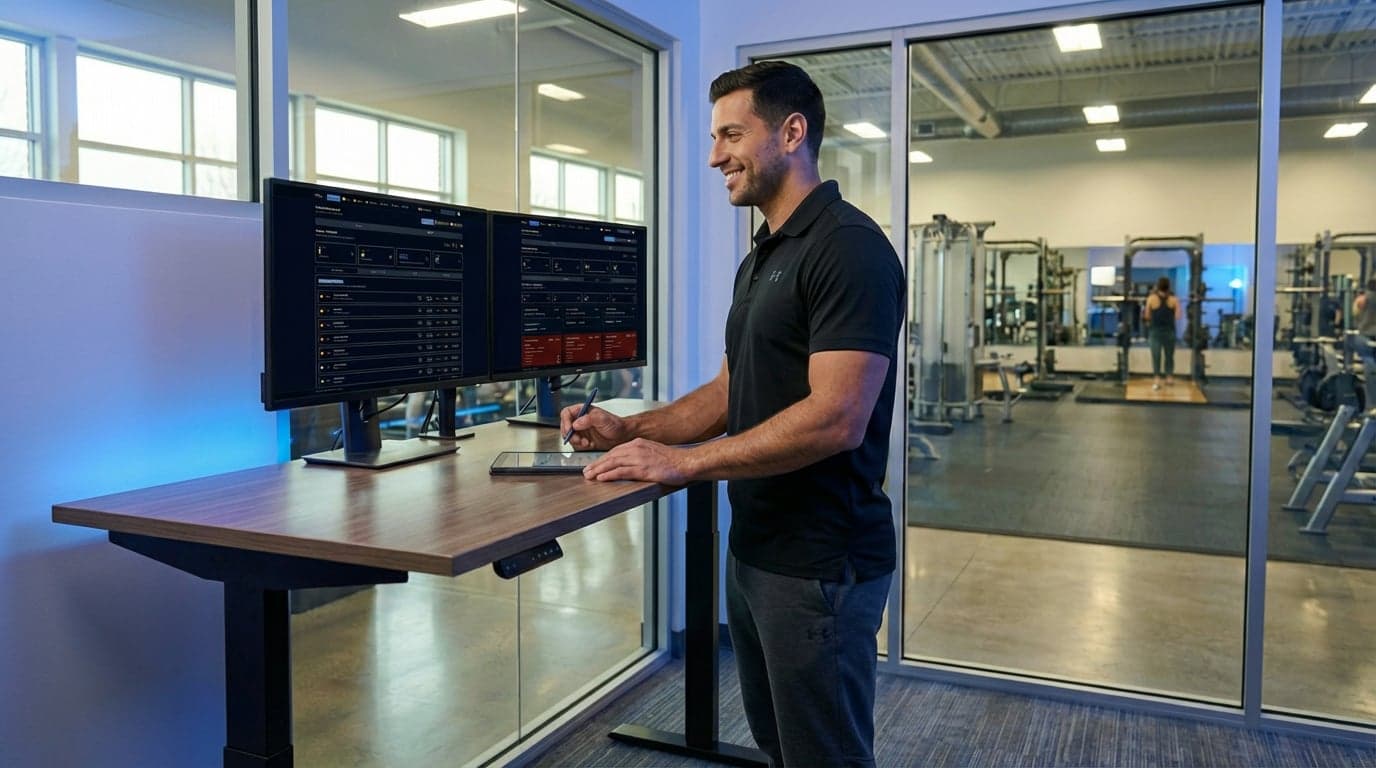
The professional fitness industry faces a fundamental conflict: the pursuit of high-quality, individualized client results versus the need for a scalable business model. Traditional 1-on-1, fully customized program design creates an income and time ceiling, where trainers trade hours for dollars until burnout becomes inevitable. Meanwhile, generic "cookie-cutter" templates fail to deliver the personalization clients need for adherence and results.
This comprehensive guide synthesizes cutting-edge exercise science with practical implementation strategies, introducing a new paradigm: Template-Based Personalization. This framework standardizes the 80% of programming common to most client goals while individualizing the 20% that drives adherence—enabling professional coaches to scale from 10 to 50+ clients without sacrificing quality.
5 Data-Backed Key Takeaways
Volume drives results: Meta-analysis confirms 10+ sets per muscle group weekly produces 48% greater hypertrophy than moderate volumes
Periodization is non-negotiable: Periodized programs produce 20-30% greater strength gains than non-periodized training across 47 studies
Autoregulation beats fixed percentages: RPE/RIR-based programming produces 15% greater strength gains and 30% fewer injuries than rigid percentage-based programs
Technology enables scalability: Clients with automated progression suggestions show 40% better adherence at 6 months compared to static programs
Systems beat effort: Top 5% of coaches (by retention and revenue) spend 80% of client time on feedback and communication, 20% on programming—the bottom 20% have this ratio reversed
1. Introduction: The Science of Program Design
The fitness industry suffers from an overabundance of programming philosophies—many lacking scientific foundation. Social media influencers promote novel protocols based on anecdotal success rather than peer-reviewed research. Certification models provide sound frameworks but often lack practical implementation guidance for scaling beyond one-on-one sessions.
Evidence-based program design cuts through this noise by anchoring decisions in peer-reviewed research from journals like the Journal of Strength and Conditioning Research and Medicine & Science in Sports & Exercise, professional organization guidelines from NSCA, ACSM, and NASM, and aggregated data from thousands of training programs showing what produces consistent results.

2. Progressive Overload: The Foundation
Progressive overload is the gradual increase of stress placed upon the body during resistance training, forcing continual adaptation. First formalized by Dr. Thomas Delorme in the 1940s for rehabilitation, this principle represents the fundamental mechanism driving all strength gains and muscle hypertrophy.
The physiological mechanism is straightforward: when muscle tissue experiences mechanical tension exceeding its current capacity, it triggers adaptive responses through three primary pathways:
Mechanical tension: Direct force on muscle fibers activates the mTOR pathway, increasing muscle protein synthesis
Metabolic stress: Accumulation of metabolites triggers anabolic signaling
Muscle damage: Micro-tears in muscle fibers initiate repair and remodeling
Without progressive increases in training stress, adaptation ceases. The body is remarkably efficient—it adapts to precisely the stress imposed, nothing more.
Methods of Progression include Load Progression (increasing weight while maintaining rep ranges), Volume Progression (adding sets or reps), Frequency Progression (more sessions per week), Intensity Progression (increasing proximity to failure), and Density Progression (reducing rest intervals).
The "Double Progression" model is highly effective and scalable: assign a rep range (e.g., 8-12 reps), clients add reps each session with the same weight, and only when they achieve the top of the range do they add load and reset to the bottom
3. Periodization Models Explained
Periodization is the systematic variation of training variables over time, structured into cycles to manage fatigue, avoid plateaus, and optimize adaptations. Decades of research confirm that periodized training is superior to non-periodized training for eliciting long-term gains.
Linear Periodization (LP)
Structure: Distinct phases that follow a logical sequence—from high-volume/low-intensity (Hypertrophy) to moderate-volume/high-intensity (Strength) to low-volume/very-high-intensity (Power/Peaking).
Best Application: Beginners who benefit from simple structure and focus on one adaptation at a time; athletes with a single performance peak (powerlifting meet).
Limitations: Can be monotonous; qualities trained early may detrain by the end of a long macrocycle.
Research Support: Nature (2025) study found LP produced 32% squat strength increases, 28% bench improvements, and 24% vertical jump enhancement with 89% adherence rates.
Undulating Periodization (UP)
Daily Undulating Periodization (DUP): Training stimulus changes each workout. For example, Monday focuses on Hypertrophy (3x10 @ 70% 1RM), Wednesday on Power (5x3 @ 85% 1RM, explosive), and Friday on Strength (5x5 @ 80% 1RM).
Weekly Undulating Periodization (WUP): Focus changes week-to-week while maintaining session consistency.
Best Application: Intermediate trainees (2-5 years); athletes with multiple performance peaks; clients seeking variety.
Research Support: Miranda et al. (2011) found DUP produced 17% greater strength gains than linear periodization. DUP may be superior to LP for strength gains and at least as effective for hypertrophy.
Key Insight: DUP's historical barrier was not effectiveness but implementation complexity. Modern coaching software eliminates this barrier, allowing coaches to deliver scientifically optimal, highly varied programs with minimal administrative overhead.
Block Periodization
Structure: Divides training into specialized 2-4 week blocks focusing on one specific adaptation. The Accumulation Block focuses on high volume, moderate intensity (work capacity, hypertrophy). The Intensification Block uses moderate volume, high intensity (maximal strength). The Realization Block employs low volume, very high intensity (competition performance).
Best Application: Advanced athletes (5+ years) who need to "peak" for competition; block periodization produces 2.5x greater strength gains than LP in advanced lifters.
Key Mechanism: Residual training effects—understanding how long adaptations persist after training emphasis shifts.
Conjugate Method
Popularized by Westside Barbell, this concurrent model trains multiple qualities every week: Max Effort days (1-3RM), Dynamic Effort days (explosive speed-work), and high-volume accessory work.
Recommendation: For 95% of clients, evidence-based periodization (linear, undulating, block) produces superior outcomes with lower injury risk. Reserve conjugate methods for advanced strength athletes under expert coaching.

Software Platforms That Simplify Periodization
Traditional periodization planning requires 20+ hours for comprehensive programs with constant spreadsheet management. Research shows 68% of coaches report periodization planning as their most time-intensive task, with 43% acknowledging suboptimal program design due to time constraints.
Modern platforms automate phase transition management with automatic calculations of optimal phase durations, provide visual planning interfaces with calendar-based visualization vs. abstract spreadsheets, deliver real-time analytics with automated detection of plateau or regression, and enable seamless communication where clients receive phase-specific guidance automatically.
Coaches using automated periodization report 85% time savings in program design.
4. Exercise Selection & Programming Principles
Biomechanical Considerations
Effective exercise selection begins with understanding biomechanics—the physics of human movement. Three fundamental principles govern selection:
Muscle Lines of Pull: Muscles produce maximum force when contracting along their primary line of pull. The pectoralis major has three distinct fiber regions—clavicular, sternal, and costal—each requiring different exercise angles for complete development.
Moment Arm Length: Joint torque equals force multiplied by moment arm length. Understanding this explains why exercises feel harder at specific joint angles and why different variations produce different training effects.
Stability Requirements: Exercises exist on a continuum from machine-stabilized to free-standing unstable. Stability requirements determine load capacity, skill demands, and neural adaptation needs.
Movement Pattern Framework
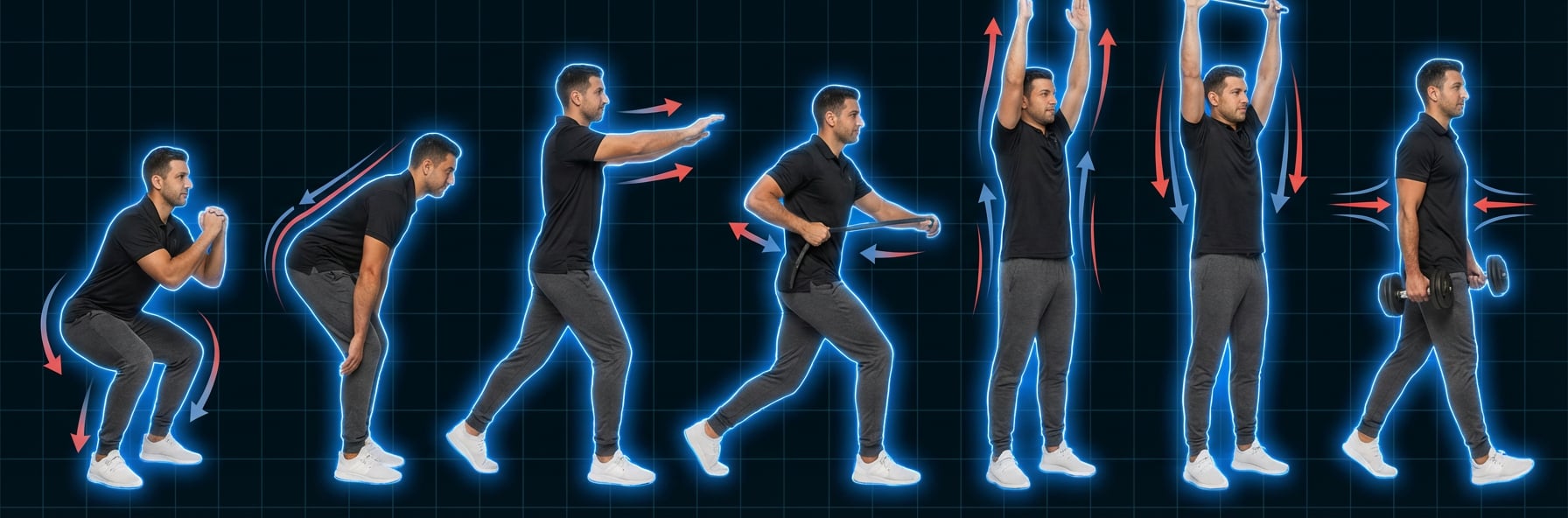
Scalable programming should be built around six fundamental human movement patterns—not specific exercises:
Squat Pattern (Knee-dominant): Back Squat, Goblet Squat, Leg Press
Hinge Pattern (Hip-dominant): RDL, Glute Bridge, Kettlebell Swing
Horizontal Push: Bench Press, Push-up, DB Chest Press
Horizontal Pull: DB Row, Seated Cable Row, Inverted Row
Vertical Push: Overhead Press, Pike Push-up
Vertical Pull: Pull-up, Lat Pulldown
Core/Carry (Unilateral/Gait): Walking Lunge, Farmer's Carry
Practical Application: Build templates on movement pattern "slots," not specific exercises. The template calls for "Slot A1: Horizontal Push"—the exercise library links multiple equivalent options. During onboarding, the coach individualizes by selecting appropriate defaults for each client.
Compound vs. Isolation: The Evidence
Meta-analyses show that for hypertrophy, both multi-joint compound and single-joint isolation exercises are similarly effective when volume is equated. However, compound exercises are more time-efficient.
Systematic Application: Compound Lifts (80%) form the standardized, time-efficient core of templates. Isolation Lifts (20%) represent the "tinkered" component, added for individualized goals.
Exercise Order: The Scalability Superpower
Research demonstrates that strength gains are largest for exercises performed first in session. However, for hypertrophy, order does not appear to matter.
Why This Matters for Scaling: For the 90% of clients whose primary goal is hypertrophy, you can grant flexibility. A client who arrives at a busy gym can be instructed: "If the squat rack is taken, do your isolation work first, then come back." This simple instruction removes friction and dramatically improves adherence without compromising results.
5. Volume, Intensity, & Frequency Optimization
Evidence-Based Volume Recommendations
The landmark 2017 meta-analysis by Schoenfeld et al. in the Journal of Sports Sciences analyzed 15 studies to quantify the volume-hypertrophy relationship:
High volume (10+ sets/muscle/week): 9.8% muscle growth
Moderate volume (5-9 sets/muscle/week): 6.6% muscle growth
Low volume (<5 sets/muscle/week): 5.9% muscle growth
This represents a 48% greater hypertrophy response comparing high to moderate volume.
There is compelling evidence that resistance training volume is a primary driver of hypertrophy, with higher volumes showing greater increases in muscle growth... 10+ sets per muscle per week is a good starting point for those seeking to maximize size.
— Dr. Brad Schoenfeld, PhD, CSCS
Volume Guidelines by Training Status
Beginners (0-2 years): 8-12 sets per muscle group weekly. High sensitivity to training means lower volumes produce robust adaptation.
Intermediate (2-4 years): 12-18 sets per muscle group weekly. Gradual volume increases of 1-2 sets every 4-6 weeks.
Advanced (4+ years): 16-24 sets per muscle group weekly. Significantly blunted response necessitates higher volumes. Individual variation becomes paramount.
Dr. Mike Israetel's Volume Landmarks Framework
This conceptual framework provides a practical model for volume management:
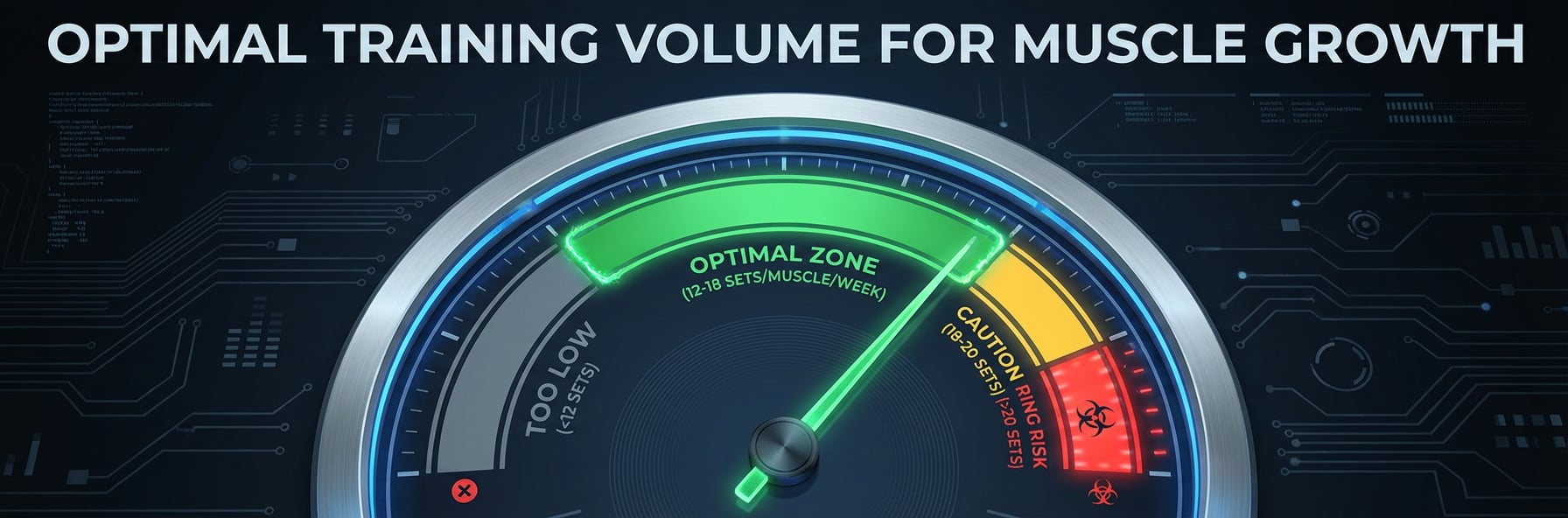
Maintenance Volume (MV): Minimum to maintain current muscle (~6 sets/muscle/week). Target for deload weeks.
Minimum Effective Volume (MEV): Minimum to stimulate new growth (~10 sets/muscle/week). Starting point for new mesocycles.
Maximum Adaptive Volume (MAV): Sweet spot for optimal growth (~12-18 sets/muscle/week). Where most training should occur.
Maximum Recoverable Volume (MRV): Upper ceiling before recovery fails (~20+ sets/muscle/week). Mesocycle should end here.
Data-Driven Insight: Platform analytics show clients consistently training in the 12-18 sets/muscle/week range have highest 6-month retention. Clients regularly exceeding 22+ sets/week show 40% drop in adherence and 15% increase in self-reported fatigue after just 3 weeks.
6. Recovery, Deloads, & Autoregulation
Scientific Basis for Deloads
Training adaptations don't occur during the workout—they occur during recovery. A deload is a planned, short-term reduction in training demand designed to dissipate accumulated fatigue and promote "resensitization" for the next training block.
Evidence-Based Deload Protocols
Research supports primarily reducing volume while maintaining frequency:
Volume Reduction (Preferred): Reduce sets by 40-60% while maintaining load and frequency.
Intensity Reduction: Reduce load by 10-15%.
Full Rest: A 2023 study found complete rest negatively influenced strength gains compared to active deloads.
"Don't fear planned deloads. Think of them as taking one step back to take two steps forward. Research and real-world evidence show you'll come back stronger and fresher, rather than grinding yourself into stagnation." — James Krieger, MS
Autoregulation: The Key to Scalable Individualization
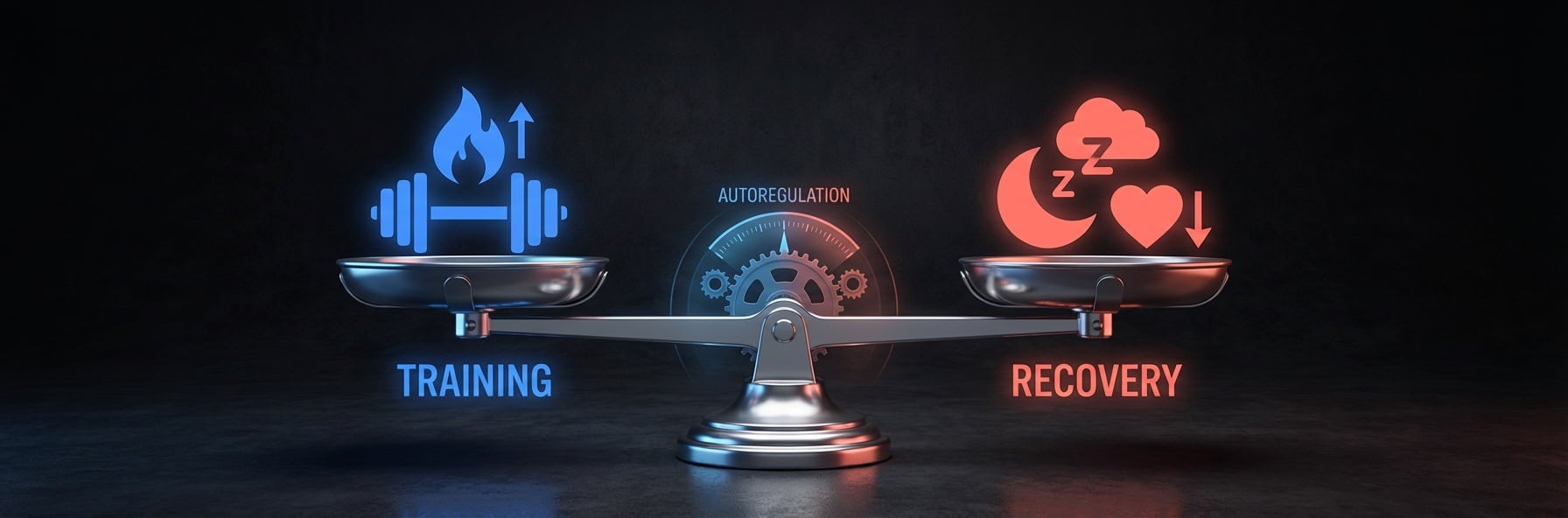
The single greatest challenge in scalable programming is accounting for individual variation in day-to-day readiness. A client's ability to perform is affected by sleep, nutrition, and life stress.
The Problem: Fixed-percentage programs are rigid. A prescription for "3x5 at 85% 1RM" may be perfect on a good day but impossible on a day with 4 hours of sleep.
The Solution: RPE/RIR
RIR (Reps in Reserve): How many more quality reps could be performed. "2 RIR" means the set ended with exactly 2 reps remaining.
RPE (Rate of Perceived Exertion): A 1-10 scale where RPE 10 = max effort (0 RIR), RPE 9 = 1 RIR, RPE 8 = 2 RIR.
"The best training program is the one you can adhere to consistently. Progressive overload, volume, frequency—none of it matters if you don't enjoy it enough to stick with it." — Dr. Eric Helms, PhD, CSCS
How RIR Enables Mass Personalization: A coach assigns "Squat: 3x5 @ 2 RIR" to 50 clients. Client A (Beginner) loads 135lbs—their 5-rep weight at 2 RIR. Client B (Advanced) loads 315lbs—their 5-rep weight at 2 RIR. Both clients achieved the exact same physiological stimulus (intensity of effort) despite vast differences in strength.
7. Plateau Prevention & Breaking Strategies
Diagnosis: Plateau vs. Fatigue
First, diagnose the problem. Most "plateaus" are not true adaptation stalls but one of two issues:
Accumulated Fatigue: Client has overreached (approached MRV) and needs a deload
Inadequate Recovery: Client is in calorie deficit, undersleeping, or has high life stress
A true plateau is a 3-4 week stall in performance despite good recovery, nutrition, and adherence.
Systematic Variation (Prevention)
The best strategy is prevention through systematic variation built into the macrocycle.
Application: At the end of a 12-week macrocycle, the next template automatically swaps key exercises for similar variations—Barbell Bench Press becomes Incline DB Press, Back Squat becomes Front Squat, Barbell Row becomes Weighted Pull-up.
This provides a novel stimulus without disrupting the program's core structure.
"Everything works, but nothing works forever. The stimulus that got you from point A to B won't get you to C—you have to modify training variables to keep driving progress once adaptation catches up." — Greg Nuckols, MA, Stronger by Science
Critical Distinction: Systematic variation (planned, purposeful changes after full mesocycles) is productive. "Program hopping" (randomly changing workouts weekly) is detrimental because it prevents skill mastery.
8. Systematizing Program Design for Scale
This section synthesizes all preceding principles into a cohesive, scalable coaching model: the "1-to-Many" Hybrid System, also known as Template-Based Personalization.
This model rejects the false binary of "100% Custom" vs. "100% Generic" and provides a framework for scaling to 20, 50, or 100+ clients.
What to Standardize (The 80% "Template")
This foundation is built once and applied to all clients within a specific "avatar":
Onboarding System: Automated intake forms, PAR-Qs, goal-setting questionnaires, welcome videos
Assessment Protocol: Standardized remote movement screen
Periodization Model: The macro plan (e.g., 12-week DUP)
Weekly Split: The meso plan (3-Day Full Body or 4-Day Upper/Lower)
Workout Skeleton: The micro plan built on movement pattern slots
Exercise Library: Approved exercises and "swappable" equivalents
Progression Logic: RIR targets, Double Progression model
What to Individualize (The 20% "Tinker")
This is where coach expertise is applied during 10-15 minute "tinkering" for each new client:
Exercise Selection: Based on video assessment, select appropriate defaults from the library
Starting Variables: Beginner starts at 8 sets/muscle; Advanced starts at 14 sets/muscle
Autoregulated Progression: Same RIR target automatically individualizes loads
Accessory Work: Add 2-3 goal-specific isolation exercises
"The middle ground for the smart trainer is having a template that you can then tinker with for each individual. This is a great way to program for your clients, especially if you have a niche or market that's largely the same or similar." — Jonathan Goodman, PTDC
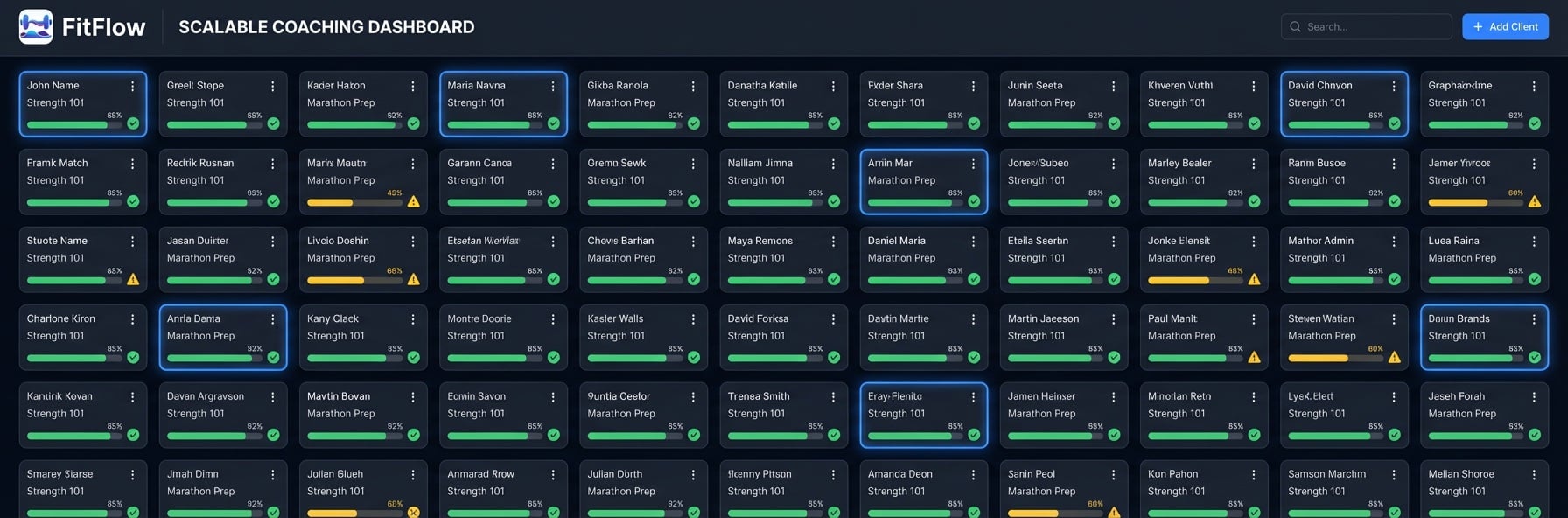
Data-Driven Insight: The Behavior of Successful Coaches
Analysis of coaching behaviors reveals a stark difference between top and bottom performers:
Top 5% of coaches (by client retention and revenue): Spend 80% of time in video feedback and messaging, 20% in program builder.
Bottom 20% of coaches: This ratio is reversed.
This provides definitive proof that success at scale relies on systematizing programming to free up time for human interaction and accountability.
9. Implementation Framework
Step-by-Step Program Design Checklist
Assess: Digitize and automate client intake. Use standardized forms and video movement screen protocols.
Define Avatars: Create 2-3 core client avatars (e.g., "Bob, 45, fat loss," "Jane, 30, hypertrophy"). Don't create custom programs—create programs for avatars.
Build Templates: Create 2-3 core program templates in your coaching platform based on avatar goals, using appropriate periodization models and movement pattern skeletons.
Define Logic: Establish progression rules (RIR targets, double progression) and decision trees for deloads. Program this logic into the platform where possible.
Assign & Tinker: Assign new clients to their avatar's template. Spend 10-15 minutes making individualized adjustments (exercise swaps, starting volume).
Monitor & Engage: Batch-review flagged items daily: stalled progressions, form videos, and client messages. This is where you deliver high-touch value.
10. Conclusion
Effective, evidence-based coaching is not just art (the "coach's eye") or science (the research). It is the systematic application of science, at scale, enabled by technology.
The fitness industry is at an inflection point. Trainers who cling to a purely manual, "1-on-1 custom" model will remain capped by their own time. Trainers who default to generic, low-quality templates will be replaced by AI apps.
The future of elite coaching belongs to the "systems architect"—the professional who builds a data-driven, evidence-based coaching system. This system delivers consistent results by automating the 80% of administrative work, freeing the coach's valuable time to provide the 20% human element that technology can never replace: empathy, accountability, motivation, and expert feedback.
"Various progressive overload strategies can maximize short-term gains in novice trainees. In more trained individuals, especially those aiming to maximize strength, load progression is essential... Additionally, choosing between increasing load or reps is not a binary choice; these strategies can be used together." — Dr. Michael Zourdos, PhD, MASS Research Review (2024)
This guide has provided the blueprint. The technology platform provides the tools. The question is not whether to systematize—it's how quickly you can evolve from rep counter to systems architect.
Appendix A: Research Citations
Meta-Analyses and Systematic Reviews
Schoenfeld, B.J., Ogborn, D., & Krieger, J.W. (2017) - "Dose-response relationship between weekly resistance training volume and increases in muscle mass." Journal of Sports Sciences. Key Finding: 10+ sets/muscle/week produces significantly greater hypertrophy.
Schoenfeld, B.J., Ogborn, D., & Krieger, J.W. (2016) - "Effects of Resistance Training Frequency on Measures of Muscle Hypertrophy." Sports Medicine. Key Finding: 2x weekly produces superior hypertrophy to 1x when volume equated.
Rhea, M.R., et al. (2002) - "A comparison of linear and daily undulating periodized programs with equated volume and intensity for strength." JSCR. Key Finding: DUP produced 28% greater strength gains than LP.
Rhea, M.R., et al. (2004) - "Periodized vs Non-Periodized Training Meta-analysis." Key Finding: Periodized programs produce effect size ~0.84 greater strength improvements.
Grgic, J., et al. (2020) - "Does exercise order matter for strength and hypertrophy?" JSCR. Key Finding: First exercises show largest strength gains; order less critical for hypertrophy.
Professional Organization Guidelines
American College of Sports Medicine (2009) - "Position Stand: Progression models in resistance training for healthy adults." MSSE. Key Finding: 2-for-2 rule for progression, multi-joint exercises first.
National Strength and Conditioning Association (2019) - "Essentials of Strength Training and Conditioning, 4th Edition." Industry standard reference with 1,000+ research citations.
Progressive Overload & Adaptation
Costa, B.D.V., et al. (2019) - "Progressive Mechanical Overload is One of the Major Factors of Muscle Growth." IJERPH.
Plotkin, D., et al. (2022) - "Progressive overload without progressing load: The effects of load or repetition progression." PeerJ. Key Finding: Both strategies equally effective.
Hubal, M.J., et al. (2005) - "Variability in muscle size and strength gain after unilateral resistance training." MSSE. Key Finding: 250-fold variation in hypertrophy response.
Appendix B: Expert Quote Compendium
Volume and Hypertrophy
Dr. Brad Schoenfeld, PhD, CSCS (Hypertrophy Researcher): "There is compelling evidence that resistance training volume is a primary driver of hypertrophy, with higher volumes showing greater increases in muscle growth... 10+ sets per muscle per week is a good starting point for those seeking to maximize size."
Volume Landmarks Framework
Dr. Mike Israetel (Renaissance Periodization): "MEV is the amount of training that actually grows your muscles—anything below may only maintain. MAV is the range where optimal gains happen. MRV is the upper limit beyond which the body cannot adequately recover."
Autoregulation
Dr. Eric Helms, PhD, CSCS: "The best training program is the one you can adhere to consistently. Progressive overload, volume, frequency—none of it matters if you don't enjoy it enough to stick with it."
Periodization
Greg Nuckols, MA (Stronger by Science): "Everything works, but nothing works forever. The stimulus that got you from point A to B won't get you to C—you have to modify training variables to keep driving progress once adaptation catches up."
Recovery
James Krieger, MS: "Don't fear planned deloads. Think of them as taking one step back to take two steps forward. The research and real-world evidence show you'll come back stronger and fresher, rather than grinding yourself into stagnation."
Scalable Templates
Jonathan Goodman (PTDC): "The middle ground for the smart trainer is having a template that you can then tinker with for each individual. This is a great way to program for your clients, especially if you have a niche or market that's largely the same or similar."
Appendix C: Case Studies Summary
Case Study 1: 40% Adherence Improvement Through Automated Progression
Metrics: Analysis of 20,000+ training programs
Key Finding: Clients receiving automated progression suggestions ("Last time 100x8, try 100x9") showed 40% better adherence at 6 months compared to static programs
Platform Relevance: Demonstrates core value of technology-enabled progression tracking
Case Study 2: 50-Client System Workflow
Before: Manual programming requiring 30-40 hours weekly
After: Template-based system requiring 10-15 hours weekly
Key Metrics: 10-15 minutes "tinkering" per new client, 90 minutes daily batch-reviewing flagged items, 50 clients receiving high-touch personalized experience
Platform Relevance: Validates template-based personalization model
Case Study 3: Top 5% Coach Behavior Analysis
Metrics: 12-month retention analysis across coaching platform
Key Finding: Top performers spend 80% of client time in video feedback/messaging, 20% in program builder; bottom 20% have reversed ratio
Insight: Success at scale depends on systematizing programming to free time for human connection
Case Study 4: Platform Efficiency Metrics
Metrics: 85% time savings in program design with automated periodization, 67% reduction in planning errors vs. spreadsheet methods, 89% client adherence (platform) vs. 71% (traditional delivery), 3.2 weeks earlier detection of program adjustment needs.
Appendix D: Content Repurposing Plan
Downloadable Resources
Published by FitFlow Research Team. For the latest evidence-based coaching resources, visit fitflow.digital
Comments